


Generation and assessment of immunomagnetic nanoparticles capable of T-cell removal
- Department of Molecular and Environmental Biotechnology, Faculty of Biology and Biotechnology, University of Science, VNU-HCM
- Department of Magnetic and Biomedical Materials, Faculty of Materials Science and Technology, University of Science, VNU-HCM
Abstract
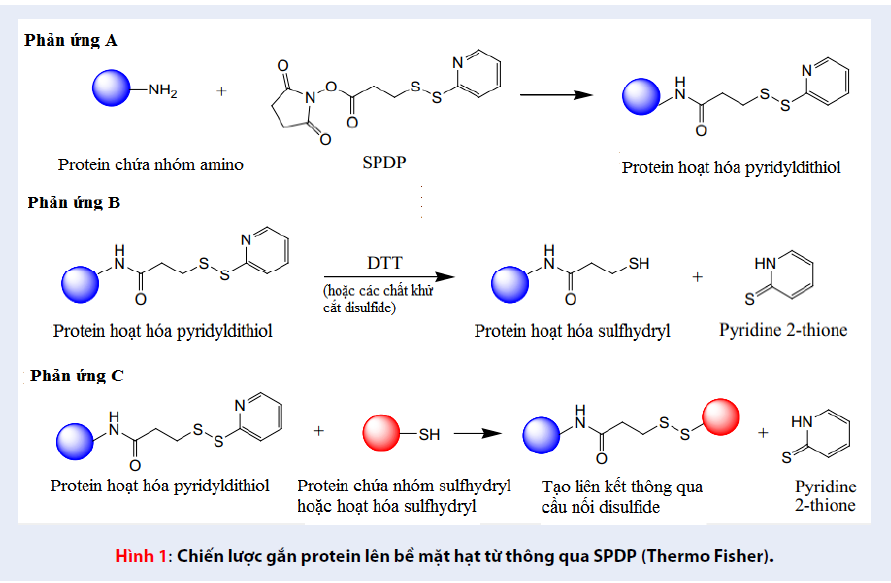
Hematopoietic stem cells (HSCs) transplantation has been the potential treatment for hematopoietic disorder patients. However, once they were prescribed HSCs transplantation as the therapy, especially allogeneic transplantation, they would face Graft versus Host disease (GvHD), which causes by the presence of T cells in donor tissue. To deal with the risk of GvHD, removal T cells in donor tissue prior to transplant to recipient is extremely indispensable. Nowadays, MACS technique using immuno-magnetic nanoparticles in order to deplete T cells shows potential solution in the transplantation. In this study, we prepared immuno-magnetic nanoparticles for separation of Jurkat T cells from cell culture. Anti-Jurkat T antibodies were conjugated onto magnetic nanoparticles via recombinant protein A/G, an antibody’s Fc specific binding protein. The bonds between protein A/G and immuno-magnetic nanoparticles were covalently linked by amine groups on the surface of magnetic nanoparticles and the protein through 3-(2 pyridyldithio) propionic acid N hydroxysuccinimide ester (SPDP). Approximately 85 μg of protein A/G and 21 μg of antibody were bound to one mg of magnetic beads. The immuno-magnetic nanoparticles were capable of isolating up to 53.3% of Jurkat T cells from culture medium.