


Investigation of Na-immigration into olivine LiFePO4
- Applied Physical Chemistry Laboratory (APCLAB), VNUHCM–University of Science
- Department of Physical Chemistry, Faculty of Chemistry, VNUHCM–University of Science
Abstract
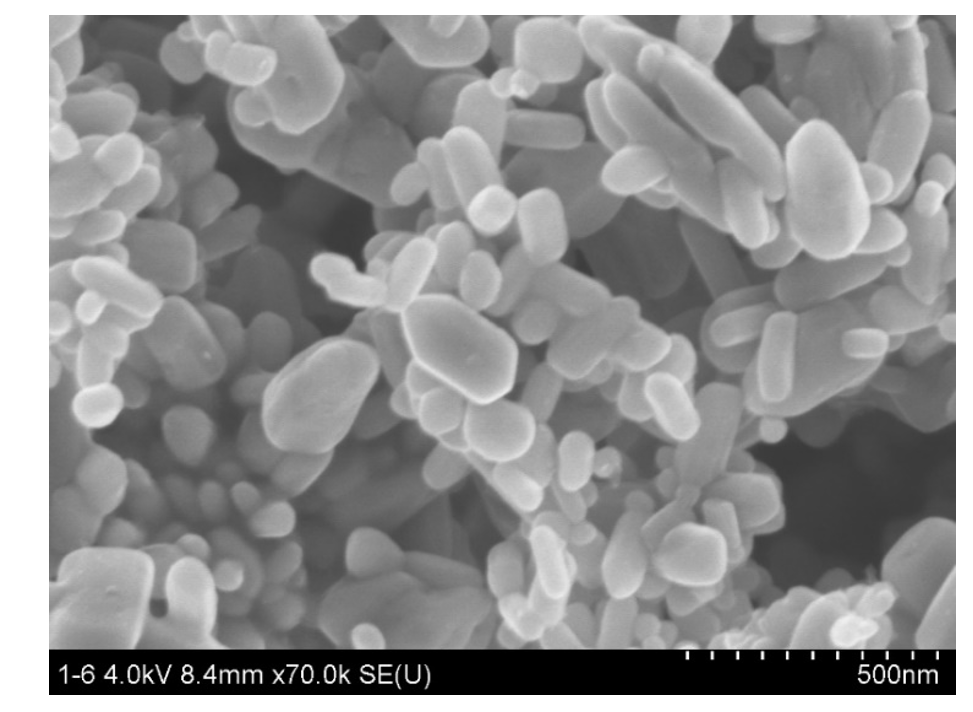
In 21th century, rechargeable batteries are main key of modern technology in many applications from portable devices (smartphone, laptop) to large-scale (hydride electric vehicle-HEV, smart grid system). Among the rechargeable batteries, Li-ion battery (LIB) is outstanding member due to the highest gravimetric as well as volumetric capacity; and Sodium-ion batteries (SIBs) can have contribution to alternating LIBs in large-scale application. Li-ion and Na-ion batteries have the same configuration with an insertion/extraction reversible of Li+ ions and Na+ ions into electrode positive and negative during charge-discharge process. This work aimed to investigate Na-immigration into olivine LiFePO4. The olivine phase LiFePO4 was prepared by hydrothermal process. The synthesized LiFePO4 was characterized the structure, morphology and electrochemical properties. The XRD pattern showed the high crystalline and, the Rietveld refinement with X2 = 2.32% confirmed the highly pure olivine phase without impurity. The SEM images exhibited the uniform and good distribution of synthesized olivine in submicrometric scale. The delithiated phase FePO4 was prepared by electrochemical oxidation at low rate C/20. The charge-discharge curves demonstrated the reversible Na-immigration into olivine host with a highest capacity of 80 mAh/g, the cyclability was found out in 73 mAh/g upon 30 cycles. The ex-situ XRD (electrode after electrochemical oxidation, electrode after Na-insertion) revealed the stability of FePO4 framework during Na-immigration.