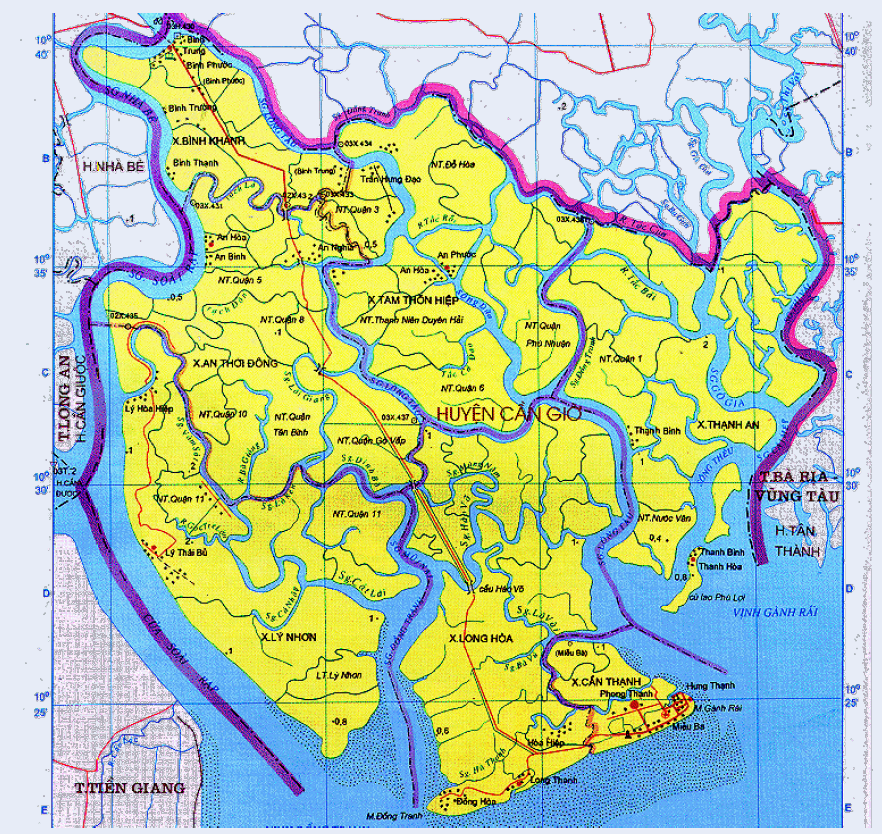

Map of shoreline environment for oil spill response in Can Gio district
- Faculty of Environment, VNU-HCM University of Science
- Sub-Institute of Hydrometeorology and Climate Change
Abstract
Ho Chi Minh City has the largest system of river ports and sea ports in Vietnam, approximately 41 operating ports with the largest cargo volume of import and export goods. Due to the high density of river and sea traffic, there are many potential risks of oil spills due to collisions and accidents of water transport vehicles. Therefore, mapping shoreline environment is essential for the oil spill preparedness and response to identify highly contaminated areas and sensitive areas that need to be prioritized for timely prevention and protection. The objective of the study is to establish map of shoreline environment for the oil spill preparedness and response in Can Gio District based on the ESI guideline of NOAA (2002). The map consisted of three components: (1) shoreline classifications, (2) biological resources, and (3) human resources. The research result shows that Can Gio District is a highly sensitive area with oil spills due to the appearance of the mangrove ecosystem and this area grows salt water and brackish water aquaculture such as clam, oyster, cage fish, lipopenaeus (white shrimp), and tourist attractions like beaches, ecotourism destinations. In general, Can Gio is identified as a high sensitive region that needs timely measures to mitigate impacts of oil spill on natural environment and local socio-economy.