


Thermoplastic polyurethane flame retardant using phosphorus/phosphorus-nitrogen compounds
- University of Science, VNU-HCM
Abstract
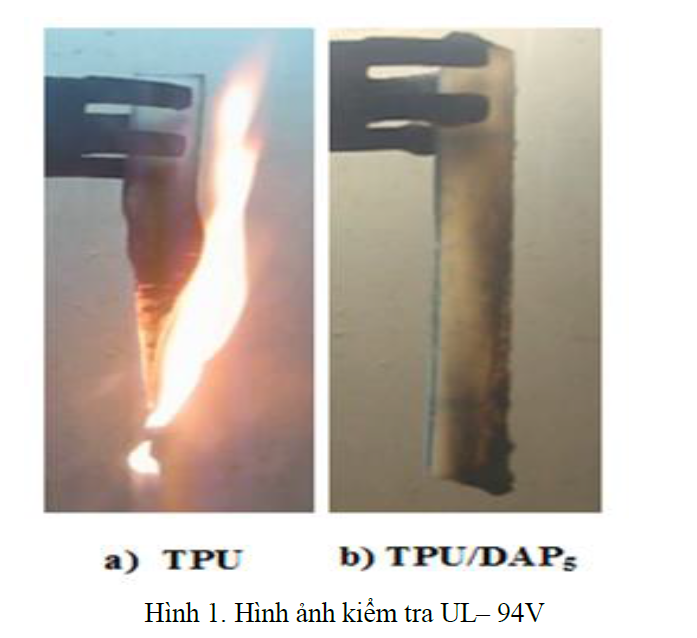
In order to improve fire performance of thermoplastic polyurethane (TPU) material, halogen-free flame retardants (triphenylphosphate- TPP and diamonium hydrogen phosphate-DAP) were studied in an attempt to obtain UL-94V ratings. The fire behaviors and thermal stability properties were evaluated using UL-94 vertical test and thermogravimetric analysis (TGA). The UL- 94V results showed that V-0 ratings were achieved at 5 wt% of DAP or 7.5 wt% loading of TPP. The incorporation of these flame retardant (FR) increases the flame retardant properties as well as the amounts of charred residues protecting the mixture from further degradation. This assertion could be accepted when observing that the char residual of TPU/DAP mixture at 500–600oC was much higher than that of neat TPU. The char layer limited the amount of fuel available and insulate the underlying composite material from the flame and, thus, make further degradation more difficult. The mechanism of flame retardants was also discussed in this study.