


Wound healing activity of Conyza canadensis (L.) Cronquist
- University of Science, VNU-HCM
Abstract
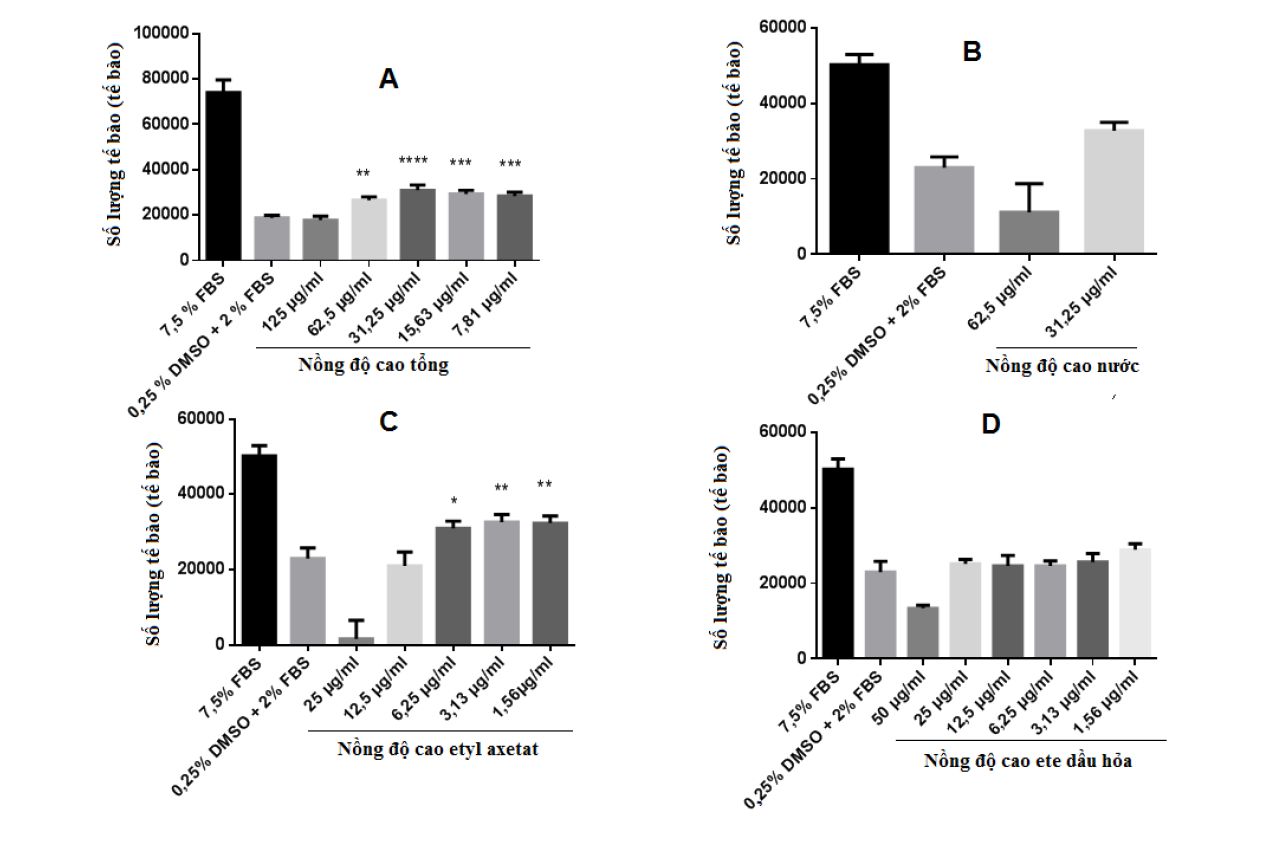
Conyza canadensis (L.) Cronquist (CCL) has been used by K’Ho minority in Bidoup Nui Ba national park, Lam Dong province, Vietnam as one of wound healing remedies. However, the scientific proof of treatment is still unclear. This study aimed to evaluate this wound healing potential of CCL. CCL power was extracted by ethanol and then partitioned consecutively with petroleum ether, ethyl acetate and water. Wound healing potential was evaluated by antibacterial activity, stimulation of fibroblast and keratinocyte proliferation. Agar-well diffusion was used in the antibacterial tests and the results showed that CCL had antibacterial activity against 02 dermatitis bacteria (Pseudomonas aeruginosa, Staphylococcus aureus) and 02 opportunistic infection bacteria (Escherichia coli, Enterococcus faecalis). Moreover, our results illustrated that CCL stimulated the fibroblast and keratinocyte proliferation compared to the control. Particularly, the fibroblast division increased 1.6 times at 31.25 µg/mL when treated by ethanolic extract, while ethyl acetate fraction showed 1.7 times increase at 10 µg/mL in keratinocyte proliferation compared to the control. Taken together, our study contributed scientific base of CCL in the wound healing.