


Isolation of Flavonoid and Polyphenolic Compounds from the EtOAc Extract of Ensete glaucum (Roxb.) Cheesman Seeds
- Ho Chi Minh City University of Science
Abstract
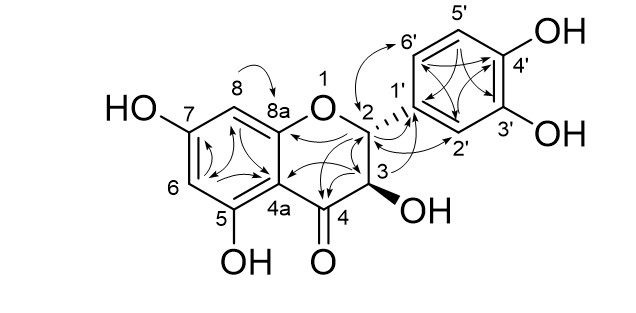
Ensete glaucum (Roxb.) Cheesman, commonly known as solitary banana, belongs to the family Musaceae. In traditional medicine, E. glaucum has been used for the treatment of swelling, joint pain, fatigue, kidney stones, digestive disorders, and for its hypoglycemic effects. Previous studies on the chemical composition have reported that ripe fruits of E. glaucum collected in Thailand are rich in flavonoids and polyphenolic compounds. However, studies on the chemical constituents and biological activities of E. glaucum seeds are still scarce. In a screening study of Vietnamese medicinal plants for antihyperuricemic activity via xanthine oxidase (XO) inhibition, the crude MeOH extract of E. glaucum seeds exhibited strong XO inhibitory activity, with an IC50 value of 83.44 µg/mL. Therefore, to further elucidate the chemical constituents and XO inhibitory potential of this species, the present study focused on the isolation of compounds from the EtOAc extract of E. glaucum seeds. Using normal-phase column chromatography in combination with modern spectroscopic techniques, six compounds were isolated and identified as (–)-(2S)-naringenin (1), (+)-5,7,3′,5′-tetrahydroxyflavanone (2), taxifolin (3), nobiletin (4), (+)-β,4,4′-trihydroxy-3,3′-dimethoxydihydrochalcone (5), and (+)-(2R)-1-[11-(ferulyloxy)undecanoyl]glycerol (6). All six compounds are reported for the first time from the genus Ensete. All isolated compounds were evaluated for their antihyperuricemic activity through inhibition of xanthine oxidase, among which compounds 1-3 exhibited strong inhibitory effects, with IC₅₀ values of 90.6, 81.0, and 69.5 µM, respectively.