


Application of image processing algorithms for determining polarization types and limb tilt angles of hyperbolas in ground penetrating radar profiles
- Faculty of Physics and Engineering Physics, University of Science, Ho Chi Minh City, Vietnam
- Vietnam National University, Ho Chi Minh City, Vietnam
Abstract
In the Ground Penetrating Radar (GPR) method, high-frequency electromagnetic waves are transmitted into the subsurface environment and subsequently reflected upon encountering buried objects that exhibit significant contrasts in electromagnetic properties. On GPR radargrams, these reflections from underground targets typically manifest as hyperbolic signatures, in which the apex position, limb geometry, tilt angle, and signal polarity constitute the most fundamental features for the data interpretation process. The automated identification and extraction of these specific characteristics are of immense practical significance for processing large-scale survey datasets, facilitating the correlation of anomalies across multiple scan lines, and substantially reducing the heavy reliance on manual interventions.
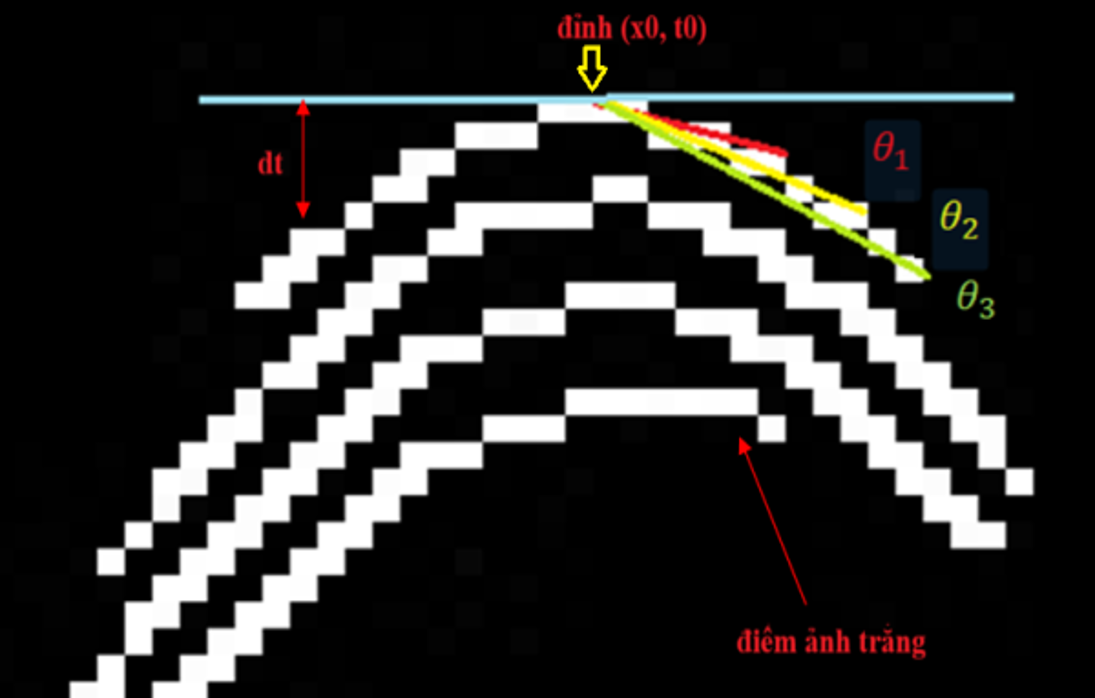
This research implements and performs a comprehensive comparative analysis of two prominent image processing algorithms, namely AutoHVS and RANSAC, for the precise determination of apex coordinates and hyperbola limb tilt angles on GPR profiles. Furthermore, the study proposes an innovative approach utilizing the AutoHVS algorithm to assist in identifying polarity types based on edge structures following the application of the Canny edge detection algorithm. The capability to analyze polarity types through edge structures opens up new research directions for supporting the classification of the material nature of detected objects. Results derived from both theoretical models and real-world, field-acquired data across various locations with diverse underground infrastructure indicate that the two methods yield highly consistent outcomes for tilt angle determination. Simultaneously, the hybrid AutoHVS–RANSAC approach effectively enhances the level of automation and mitigates the adverse impacts of noise during the input data selection phase. These research findings contribute to the establishment of a robust automated workflow for identifying the geometric features of hyperbolas, thereby providing significant support for GPR data interpretation in geological surveys and underground engineering applications.